The Ultimate Guide to Email Marketing Automation in 2026
Discover how email marketing automation can transform your business in 2026. Learn about top tools, strategies, and future trends.
Email Marketing Automation: The Future of Outreach
Email marketing automation lets you create, personalize, and send targeted email campaigns to the right people at exactly the right time—without constant manual effort. In 2026, the best systems integrate rich data, AI, and behavioral triggers to turn cold leads into genuine conversations and repeat customers.
Your list is growing, but nurturing those leads at scale feels stuck in 2016. Maybe your SaaS startup is launching a product, your indie consultancy is buried in project work, or your ghostwriting hustle is booming with referrals. Yet, your inbox is a graveyard of unreturned pitches and unanswered follow-ups. Managing cold email manually is relentless: you set reminders to chase leads, try to track who opened what, and piece together spreadsheets and sticky notes, hoping some deals won’t slip through the cracks.
Most people approach automated email outreach as a simple “set and forget” tool, yet that mindset is exactly why their outreach falls flat in 2026. Today’s buyers expect every email to be relevant, timely, and tailored—like it was sent just to them, not blasted off a list. The old tricks of scheduling batch campaigns or dropping prospects into weeks-long drip sequences barely make a dent against smarter spam filters, rising privacy demands, and sky-high SaaS competition.
But effective email automation done right isn’t just about saving time. It’s about systematically creating trust, personalizing at scale, and uncovering the exact moments your leads are most likely to say “yes.” In this guide, you’ll get insider strategies for transforming cold outreach into warm introductions, discover the tools powering automation in 2026, and see what separates campaigns that convert from those that vanish into inbox oblivion.
Ready to finally make email a scalable engine for your business—without losing the human touch? You’re about to see how smart automation can make every cold message feel personal, every follow-up feel intentional, and every campaign feel like it was crafted just for your next big client.
Why Email Marketing Automation is Essential in 2026
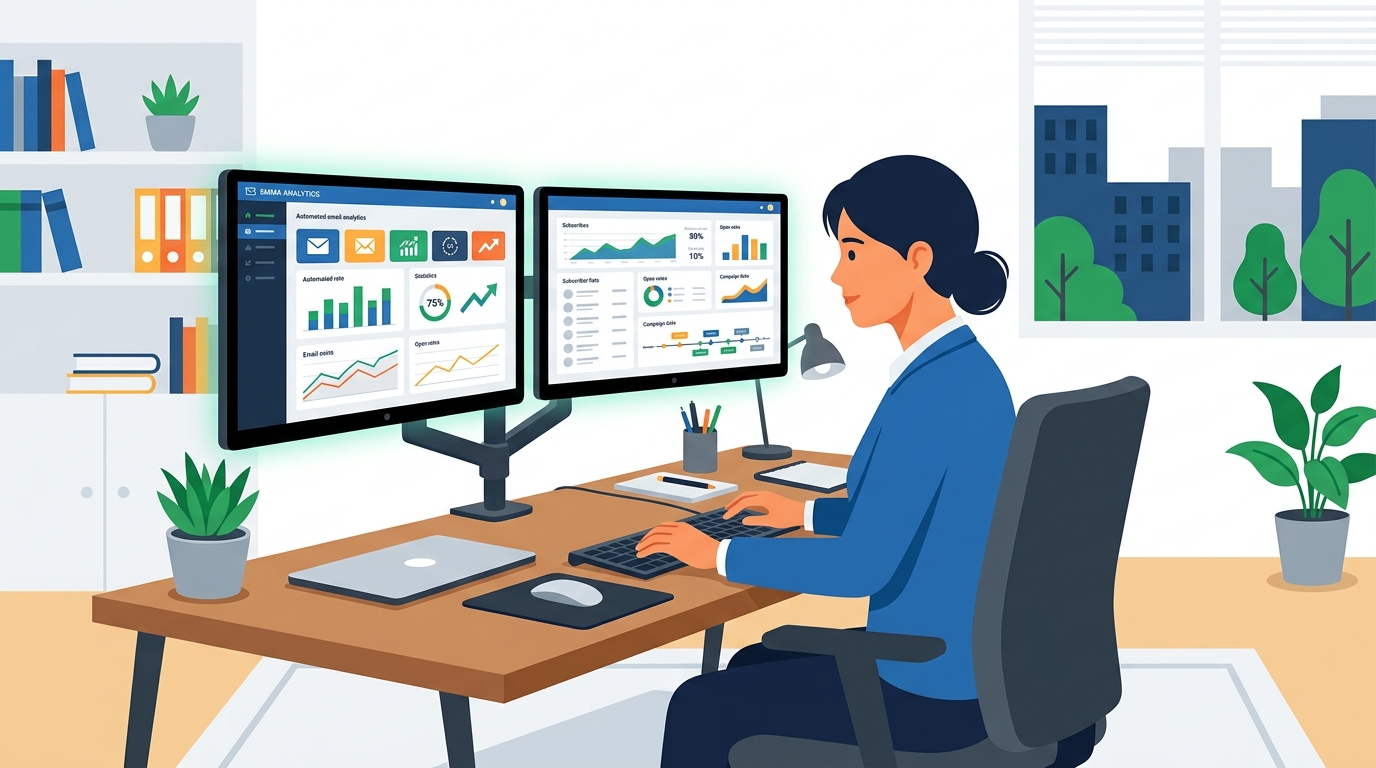
Email marketing automation is the backbone of modern outreach—without it, even the best content and cold outreach get buried in the daily grind. Businesses using email automation see improved conversion rates. Manual campaigns just can’t compete when converting subscribers into loyal customers.
The real kicker? Automated email campaigns produce significantly more revenue than non-automated ones. Automated emails work 24/7, always relevant, always on time. While your competitors are still tinkering with BCC lines and copy-pasting intro blurbs, automation is building real relationships at scale.
What Is Email Marketing Automation?
Email marketing automation uses software to send personalized, behavior-triggered messages to subscribers and prospects—no manual intervention after setup. Predefined rules (e.g., if a user signs up, send a welcome email; if they click a link, follow up) let you put the entire nurture flow on autopilot. Tools like Mailchimp and ActiveCampaign specialize in making these flows dead simple: you set the triggers, write the content, and let the platform handle delivery.
The magic happens because automation pulls context. It knows when someone opened an email, clicked a link, or ignored three messages in a row—and adjusts next steps accordingly. You're not blasting the same pitch to everyone; you're delivering the right message to the right person at the right time.
Real-World Impact: The SaaS Example
A SaaS startup doing everything manually spent hours a week filtering leads, following up, and tracking responses in spreadsheets. The founder and marketer barely had time for strategy or testing new channels. Switching to automated outreach slashed their manual tasks—outreach happened on autopilot, freeing time for strategic planning and product improvements.
What changed? Instead of reactionary work (waiting for replies, resending docs, fixing broken follow-up chains), the team moved to creative testing and optimizing sequences. The cycle of “write, send, pray, repeat” ended. Now, every lead gets the right follow-up without someone hovering over the Send button.
Key Benefits of Email Marketing Automation
Founders and indie operators refuse to run campaigns without automation in 2026 because it lets you:
- Scale Your Outreach: Handle 10 or 10,000 leads with the same headcount.
- Personalize at Scale: Every prospect feels like you wrote the email just for them.
- Free Up Your Best People: Automation handles routine touches, freeing your team for strategy.
- Increase Revenue and Retention: Sequence-based nurturing moves prospects down the funnel and keeps customers coming back.
The most valuable teams use automation not to replace creativity, but to amplify it. If your campaigns feel generic, the tech is a crutch. When they feel personal, you’ve nailed it.
How to Get Started: Audit Your Email Workflow
Want bigger results from your cold emails or nurture flows? Start with a ruthless audit:
- List every manual email process—welcome notes, onboarding, lead follow-ups, re-engagement.
- Tag each for obvious triggers (signup, download, cart abandon).
- Identify repetitive actions (copy-pasting, status updates, scheduling).
- Mark what should happen automatically.
- Prioritize automation for sequences that eat up the most time but drive real conversions.
Even automating one solid sequence—like a new subscriber welcome flow—can free up hours and boost engagement.
How Does Email Marketing Automation Work?
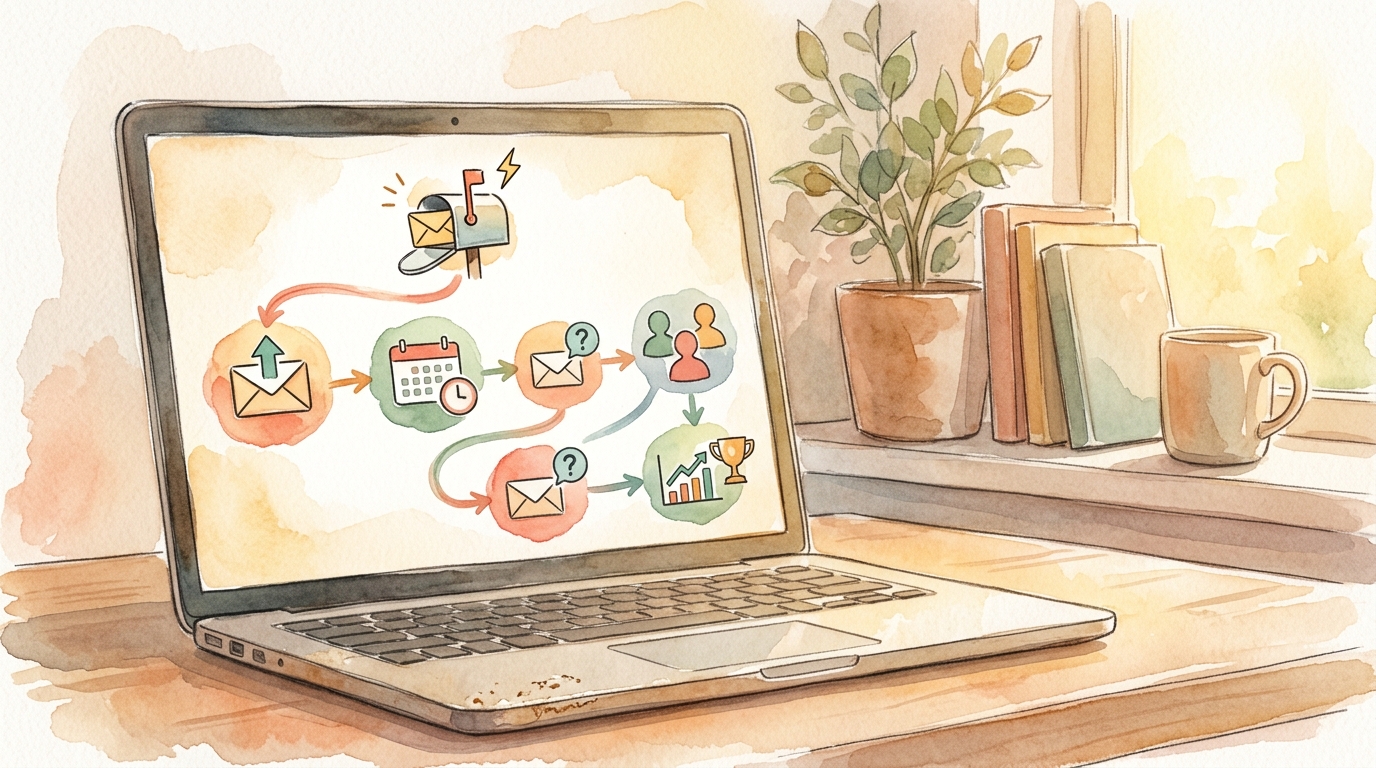
A SaaS startup hits a familiar wall: the team spends hours chasing cold leads, copying email templates, fumbling with segmented lists, and missing golden follow-ups. The founder’s inbox overflows with polite “following up…” messages and the occasional hot prospect gone cold. Then, one bold switch to automation flips their workflow on its head. Campaigns run 24/7, leads nurture by the minute, and nobody is stuck manually queuing another launch sequence.
This system works by using predefined rules to send emails whenever specific conditions are met—not whenever someone logs back in to hit “send.” This is the playbook top SaaS and indie growth teams live by: the right message, delivered at the right moment, every time.
What powers email automation?
You’re not just “scheduling emails.” True automation combines triggers, workflows, and personalized content engines:
- Triggers: Starting guns. A new subscriber, a clicked link, a missed webinar—each action (or inaction) can launch a sequence. Think of triggers as the “if this, then that” logic powering your outreach.
- Workflows: Branching journeys. Build a series of messages tailored to how contacts behave: did they open the last email? Click a CTA? Buy, or bounce? Every possibility leads down a different path.
- Personalization techniques: Not just “Hi {{FirstName}}.” True personalization pulls in product usage data, past purchases, user inactivity, so every email feels 1:1.
The smartest workflows don’t just fire once—they adapt in real time based on user behavior. This keeps engagement up and prospects moving forward.
Real-world scenario: From manual chaos to automated order
A consulting firm sending cold outreach to 300 new leads monthly had every follow-up in someone’s Google Calendar. Forget to check, and half those leads vanished. Switching to automation:
- Every new lead triggers a welcome email with a personalized intro
- If they open, they get a value-packed case study two days later
- If they don’t, a gentle nudge arrives by day four
- Booked a call? Prep materials are sent automatically
One missed step, and the system adjusts—no lead left hanging. For more on setting up automated processes, see how to automate cold email campaigns.
Common triggers and workflows you can set up (starting today)
Any founder or indie hacker can automate without a developer:
- Welcome series: New signups get a timed sequence introducing your brand, value prop, and next steps.
- Lead magnet delivery: After downloading an eBook or guide, follow-up sequences nurture the relationship.
- Re-engagement campaigns: Spot when users go silent. Trigger “come back” emails based on inactivity.
- Event follow-ups: Trigger sequences post-webinars, podcasts, or demos—tailored by attendance and actions.
Key takeaway
Automation’s superpower is scale with personalization: always-on engagement—emails triggered by real user actions, branching over logic-driven workflows, all feeling genuinely custom.
For technical details, see Mailchimp’s breakdown of email automation mechanics.
What Are the Best Email Marketing Automation Tools in 2026?
Every marketer knows the pain: hours spent crafting emails, only to watch them get ignored or land in spam. The root cause? Generic, mistimed emails that never connect. Here’s the fix: automation. Leading tools in 2026 don’t just schedule—they send the right message at the perfect moment.
What makes a top email automation tool in 2026?
Strong solutions:
- Personalize every message based on customer actions and preferences.
- Automate multi-step drip series, onboarding flows, and re-engagement campaigns.
- Offer intuitive drag-and-drop builders.
- Integrate smoothly with CRM, sales stacks, and social platforms like Replyburst.
- Deliver usable analytics to know what’s working.
A campaign that once took days now runs on autopilot, firing tailored sequences whenever someone subscribes, clicks, or goes cold. That’s how you scale without losing your mind.
Top contenders: ActiveCampaign, Mailchimp, Omnisend
ActiveCampaign is the heavyweight for advanced workflows. Visual automations let you build “if-this-then-that” trees—send personalized offers within minutes after a lead visits your pricing page. Trusted by consulting, SaaS, and content creators for adaptive segmentation and robust CRM.
Mailchimp is user-friendly and ideal for indie hackers and solo creators. Its visual editor and automation templates spin up welcome series, abandoned cart nudges, and win-back flows fast. Its integrations are extensive.
Omnisend specializes in ecommerce but works beyond retail. Its unique edge: multichannel capability—including SMS and WhatsApp. If your audience is scattered, Omnisend orchestrates unified campaigns with template-driven automation.
Case study: Smarter workflows, better results
A midsize content agency boosted lead gen without burnout by switching to ActiveCampaign. They built workflows where every cold lead received a personalized sequence triggered by signup source and interactions. The old approach was manual segmentation and generic follow-ups. The new setup used real-time segmentation, personalized messages, and automated reminders. Result: double meetings booked with half the admin time.
How to choose the right tool for your business
Don’t grab the shiniest tool. Instead:
- Map your workflows: Outline core automations—drip series, behavioral triggers, event-based sends.
- Assess integrations: Ensure CRM, social engagement, and analytics tools connect smoothly. Tools like Replyburst complement social outreach on platforms like X.
- Balance price vs. power: Beware starter plans that cripple features as your list grows. Price out six-month needs.
- Test usability: Automation only works if used daily. Demo builders and explore analytics.
The best tool fits your workflows, scales with growth, and is easy to operate. Compare, demo, and switch if needed. For evolving reviews, see emailtooltester.com’s guide.
Email Marketing Automation vs. Traditional Campaigns
Trying to decide between automated and traditional email campaigns? Automated campaigns offer scalability and personalization traditional campaigns can’t touch. Traditional campaigns require repeat manual labor, and lack dynamic targeting—resulting in fewer opens, clicks, and revenue.
What’s the Real Difference?
Automated email marketing builds trigger-based sequences. For example, a SaaS founder signing up for a trial automatically gets a personalized welcome series. Follow-ups adjust based on clicks, replies, or ignoring. Automation tools use dozens of behaviors and data points—so every touch feels intentional.
Traditional campaigns require writing, segmenting, scheduling, and watching for replies manually. Effort scales linearly: 50 leads = 50 emails. Growth means more admin, not more results.
Performance: Opens and Engagement
Automated campaigns pull significantly higher open rates than traditional campaigns. Real industry data shows relevance and timing boost engagement. Dynamic content—like a prospect’s name, company, or recent activity—makes emails contextually useful.
Traditional campaigns rarely go beyond basic mail merges. A/B testing timing, content, or sender requires rebuilding the campaign each time.
Practical Advantage: Time and Personalization
Automation saves time and scales your best outreach. Build a 5-email onboarding flow once; it runs by itself, nurturing leads 24/7 with zero extra effort.
That’s a life-saver when juggling prospecting with product, consulting, or ghostwriting. Traditional campaigns scale by chasing lists, scheduling, and checking bounced leads.
Personalization moves beyond “Hey [Name].” Automation customizes by user action, funnel stage, and behavior. A cold lead clicking your pricing link instantly gets a tailored case study; someone ignoring the first email gets an automated re-engagement message days later.
Side-by-Side: Automated Campaigns vs. Traditional Campaigns
| Feature/Outcome | Automated Campaigns | Traditional Campaigns |
|---|---|---|
| Personalization Depth | High (dynamic, behavior-based) | Low (static mail merge) |
| Open Rates | 60% higher | Baseline |
| Manual Labor Required | Minimal after setup | High (ongoing) |
| Scalability | Excellent | Poor |
| A/B Testing | Easy (in-platform) | Tedious (manual) |
| Triggered Sequences | Yes | No |
| Time to Launch | Fast (with templates/workflows) | Slow (every campaign manual) |
| Example Tool | ActiveCampaign, Mailchimp, Replyburst | Outlook, G Suite |
Tools like Replyburst are built for automation on social platforms, but this philosophy extends to email—look for solutions that scale without losing authenticity. For freelancers or solo founders, see how to automate cold emails for freelancers.
Which Should You Use?
If you value scale, analytics, and personalization, automated campaigns are the upgrade traditional teams wish they had years ago. Manual campaigns offer control for ultra-targeted one-offs but hit a wall as lists grow or continual follow-up is needed.
Key takeaway: Automated campaigns reach more leads, with more relevant messaging, and less hands-on effort.
Growth-focused founders and marketers use automation as the baseline, not the exception. There’s no going back once you ditch the manual grind.
Real-World Success: How Companies Leverage Email Automation
Shifts in buyer expectations have forced companies to abandon “spray-and-pray” blasts. Today’s top organizations win with automated email strategies laser-focused on user behavior instead of gut instinct. Automated, personalized emails outperform generic efforts on retention, onboarding, and re-engagement.
What does success look like with real email automation?
Personalized automated campaigns deliver bankable results across industries:
- Retention boosts: A SaaS provider revamped its customer journey with dynamic drip sequences tailored to product usage milestones. Retention jumped as customers used and expanded subscriptions.
- Churn drops: A B2B marketplace built re-engagement series for users going silent after week three. Timely, relevant offers carved churn down significantly.
- Scaled onboarding: A consulting agency automated client onboarding with sequenced intros, next steps, resources, and check-ins. What took days now takes minutes, doubling efficiency.
Platforms like Mailchimp and Braze report similar patterns.
Where manual fails and automation excels
Manual ad-hoc blasts mean you’re always behind or emailing irrelevant content. Automation lets your team focus on strategy, maps every touchpoint, and scales results without adding chaos.
| Feature/Outcome | Manual Campaigns | Automated Email Marketing | Replyburst |
|---|---|---|---|
| Personalization Options | Basic | Advanced, behavioral | — |
| Triggers & Timing | One-off, fixed | Dynamic, rule-based | — |
| Scalability | Low | High, multi-campaign | — |
| Multi-account Social Automation | — | — | Yes |
| Human-like Scheduling | — | — | Yes |
| Lead Re-engagement | Manual follow-up | Auto-triggered series | — |
| Workflow Efficiency | Low | High | — |
Key takeaway: Automated campaigns aren’t just easier—they’re smarter. Teams see measurable gains in retention, onboarding speed, and reduced churn when automating at scale.
Designing your own automation strategy: A step-by-step guide
For results like these, build for your business goal:
- Define one clear objective. Boost trial conversions? Reduce churn? Shorten onboarding?
- Map your user journey. Identify drop-offs and silences.
- Build trigger-based emails. Use behavioral signals, not just dates.
- Personalize context—not just a name tag. Segment by action, interest, or lifecycle.
- Measure, tweak, and expand. Track opens, clicks, and behavior changes; adjust sequences.
Companies using real automation platforms scale outreach without burnout. Although email is the engine, tools like Replyburst help automate social media engagement, integrating inbox and timeline campaigns.
Manual still works for one-off unique campaigns, but in 2026 and beyond, winning SaaS, consulting, and content fields run growth on automated, behavior-triggered emails. Skipping automation leaves revenue on the table.
The Future of Email Marketing Automation: Trends to Watch
The next wave is a complete shift in audience connection. For example, a mid-sized retailer with sluggish sales rolled out AI-powered automation. Now every buyer gets perfectly timed follow-ups, personalized product picks, and relevant content—boosting repeat purchases and securing marketing budgets.
Brands across SaaS, consulting, and indie content are gearing up for this transformation. The power comes from smarter automation, better data handling, and sharper compliance—trends defining the next years.
How Will AI-Driven Personalization Shape Email Automation?
AI personalization moves from “nice to have” to non-negotiable. Platforms blend user data, engagement history, and intent to craft fitting emails. Expect dynamic content blocks—personalized product recommendations, hyper-localized subject lines, adaptive send times based on prior opens.
B2B onboarding campaigns step up, tying nudges to features tried or ignored, reducing churn before customers leave. This goes beyond “Hi {First Name}”—it builds proactive, data-driven relationships.
Cross-Channel Marketing: The Rise of Social + Email
If your email platform doesn’t integrate with social, you’ll feel friction. Email and social outreach are blurring, especially with platforms like X (formerly Twitter) dominating B2B dialogue. An automation rule might email likely responders, then target silent prospects with timely X mentions.
This is real: tools support direct API bridges syncing email clicks and X replies. Tools like Replyburst set standards for authentic, on-brand X engagement. Cross-channel coordination lets savvy marketers let email and social complement, not compete.
Data Privacy and Compliance: Built-In, Not Bolted On
Ignoring privacy is marketing malpractice. GDPR, CCPA, and upcoming laws require careful automated email handling. Expect platforms with enhanced consent management, auto-suppression of unsubscribes, and transparent data dashboards.
Next-gen automation will prioritize compliance natively—consent tracking, easy data exports, and automated “right to be forgotten” handling.
Table: How Top Tools Are Adapting to the Future
| Tool | AI-Powered Personalization | Social Platform Integration (e.g., X) | Advanced Privacy Controls | Cross-Channel Scheduling |
|---|---|---|---|---|
| Mailchimp | Yes | Yes (limited) | Yes | Yes (basic) |
| ActiveCampaign | Yes | Yes (via integrations) | Yes | Yes |
| Brevo | Yes | — | Yes | Yes |
| Loops | Yes | — | Yes | — |
| Omnisend | Yes | Yes (basic) | Yes | Yes |
| Replyburst | — | Yes (X replies/posts) | — | Yes (social) |
Notice Replyburst leads in X engagement and social scheduling, while Mailchimp and ActiveCampaign push AI-rich personalization.
The Bottom Line for Founders and Marketers
Email automation in 2026 connects advanced personalization, compliance, and tight integration with platforms like X. The biggest winners experiment, blend channels, and stay ahead of regulations and tech.
Advice: Stay plugged into trends. Automation futuristic in 2024 is basic now. Challenge your tools to do more, automate workflows, and respect data.
For a broader overview, see email automation advancements. The leaders didn’t just upgrade tools—they changed approach. The rest play catch-up.
Make Automation Your Advantage
To stay ahead in 2026, embrace automated email outreach. Map your customer journey and set up automated email flows for every stage—from welcome messages to post-purchase follow-ups. Connect with your audience at the right moment, every time, without lifting a finger. As digital evolves, smart tools for engagement—whether inbox or social with Replyburst—amplify reach and efficiency. Start streamlining today and watch your business build stronger relationships, drive conversions, and future-proof marketing for what’s next.